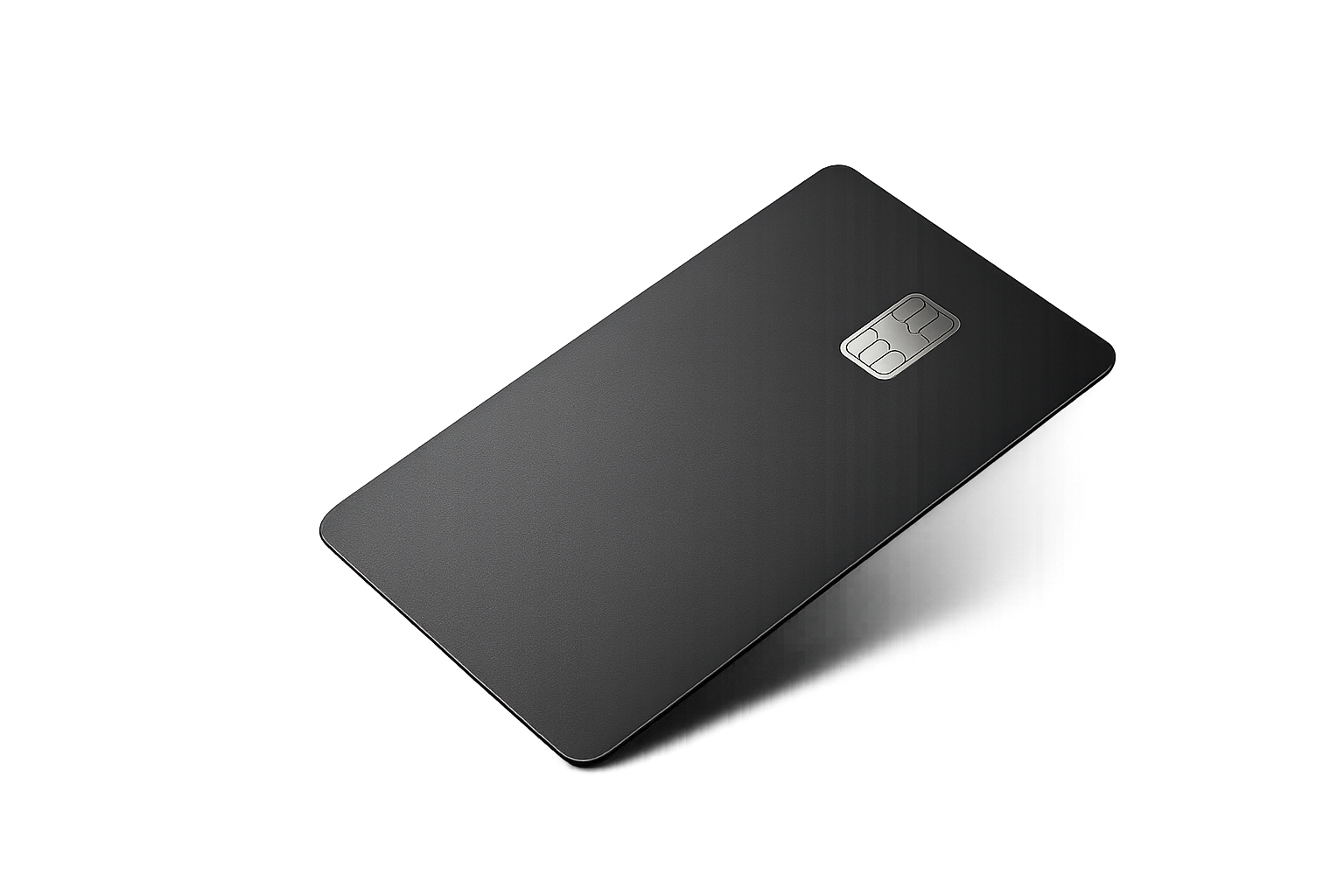
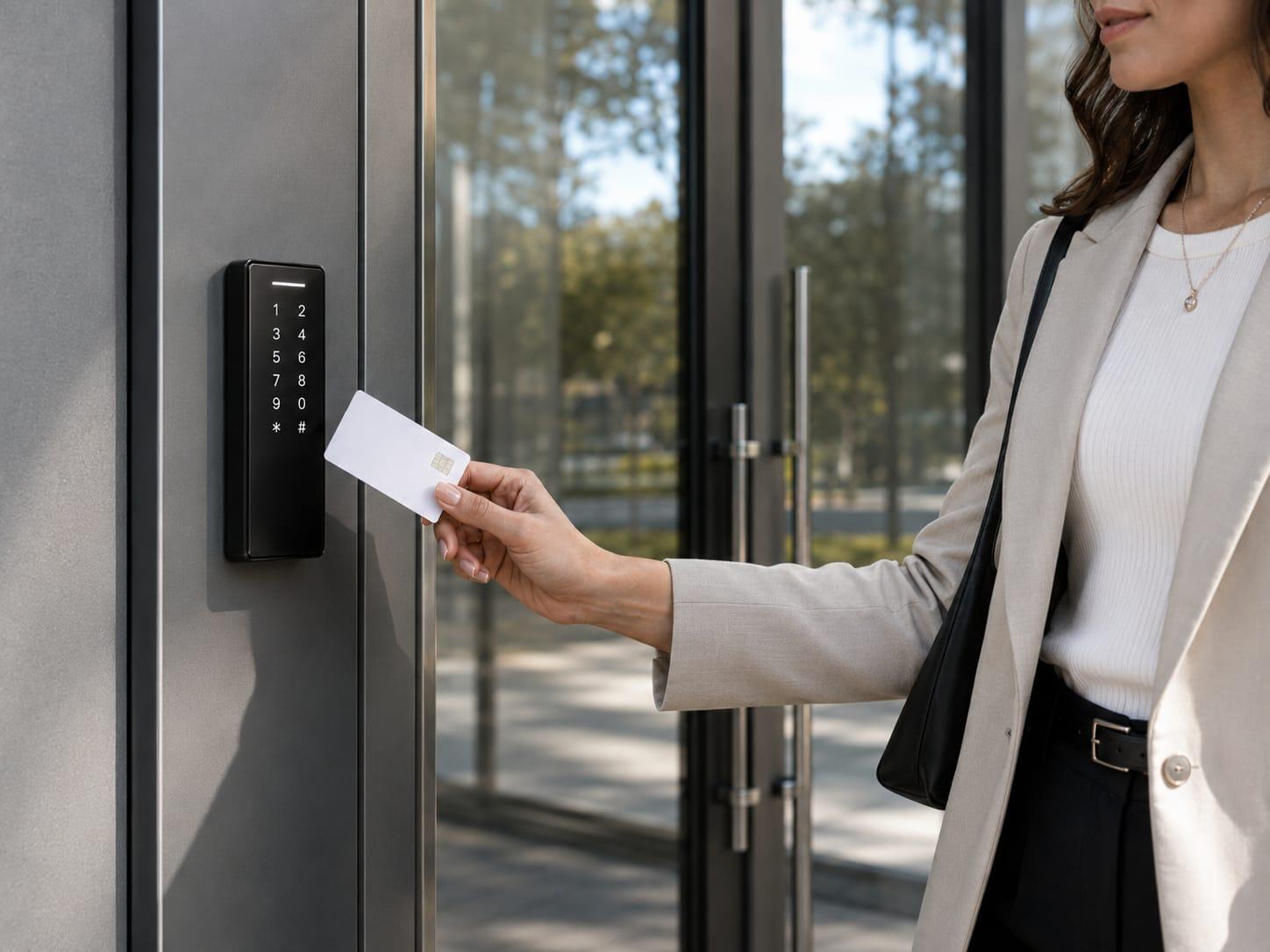
A card is one of the most familiar credentials in access control systems, but what looks from the outside like a simple card can work in very different ways. Behind the card is technology that lets the proximity reader identify it and lets the access control system know who it is assigned to.
Today, credentials come in a variety of forms: cards, fobs, stickers, and chips. The differences between them are not only in the outer form, but also in the technology, the compatibility with the reader, and the level of security that can be applied.
What is an access control card?
An access control card is an electronic credential assigned to a user in the system. The user presents the card to the proximity reader, and the system identifies the user and checks the permission defined for them.
The card itself does not open the door. The access control system is what decides whether to allow entry, according to the permissions that were set.
If a card is lost, it can be cancelled in the system and a new card issued to the user, with no need to replace the lock.
Not only a card: fobs, stickers, and chips
Credentials can come in different forms, depending on how they are used.
Proximity card
The familiar and common format, which can also serve as an employee card.
Proximity fob
A small, convenient credential that can be attached to a keychain.
Proximity sticker
A sticker containing an identification component that can be attached to a suitable item, for example the back of a mobile phone.
Proximity chip
A small identification component that can be built into various accessories and used with a compatible reader.
Branded card designs
The access control card can also serve as the organization’s employee card. Cards can be produced in a design tailored to the company’s branding, with a logo, brand colors, the employee’s name and photo, and additional details as needed.
This way, the employee receives one card that serves both for identification in the access control system and as an employee card that matches the organization’s visual language.
What is RFID?
RFID stands for Radio Frequency Identification, identification by means of radio waves.
Inside the card or fob are a chip and an antenna. When the card is brought close to or passed by a compatible reader, communication takes place between them over radio waves, and the reader receives the information needed for identification.
RFID is a broad name for identification technologies, not a specific type of card. That is why not every RFID card is necessarily compatible with every proximity reader.
What is MIFARE?
MIFARE is a family of technologies and chips used in smart cards and credentials.
Inside the card are a chip and an antenna. When it is brought close to a compatible reader, the reader supplies the card with the energy it needs to operate, and communication with the chip begins. Depending on the card type, information can be read and additional operations can be carried out with the chip.
There are different types of MIFARE, with different capabilities and security levels. One family that is especially relevant to access control systems is MIFARE DESFire.
MIFARE DESFire
MIFARE DESFire makes it possible to apply more advanced security mechanisms in the identification process.
In a system that supports the technology, authentication and encryption can be used in the communication between the card and the reader, instead of relying only on a simple card identifier.
To use these capabilities properly, it is important that the card, the proximity reader, and the access control system are compatible with one another.
How do you choose the right card?
There is no single card that suits every system. It is important to check the card’s compatibility with the proximity reader, the required level of security, and how it will be used in the organization.
It is also worth thinking ahead: a system that works with cards today may in the future combine fobs, phones, or additional credentials.
Cards and credentials with EntryBit
Choosing the credential is part of planning an access control system properly. With EntryBit, proximity cards, fobs, and additional credentials can be combined according to the organization’s needs, the type of readers, and the required level of security.
Custom-branded employee cards can also be ordered and integrated as part of the EntryBit access control system.
Need to match cards, readers, or credentials to your system? Contact us and we will help you choose the right solution.