
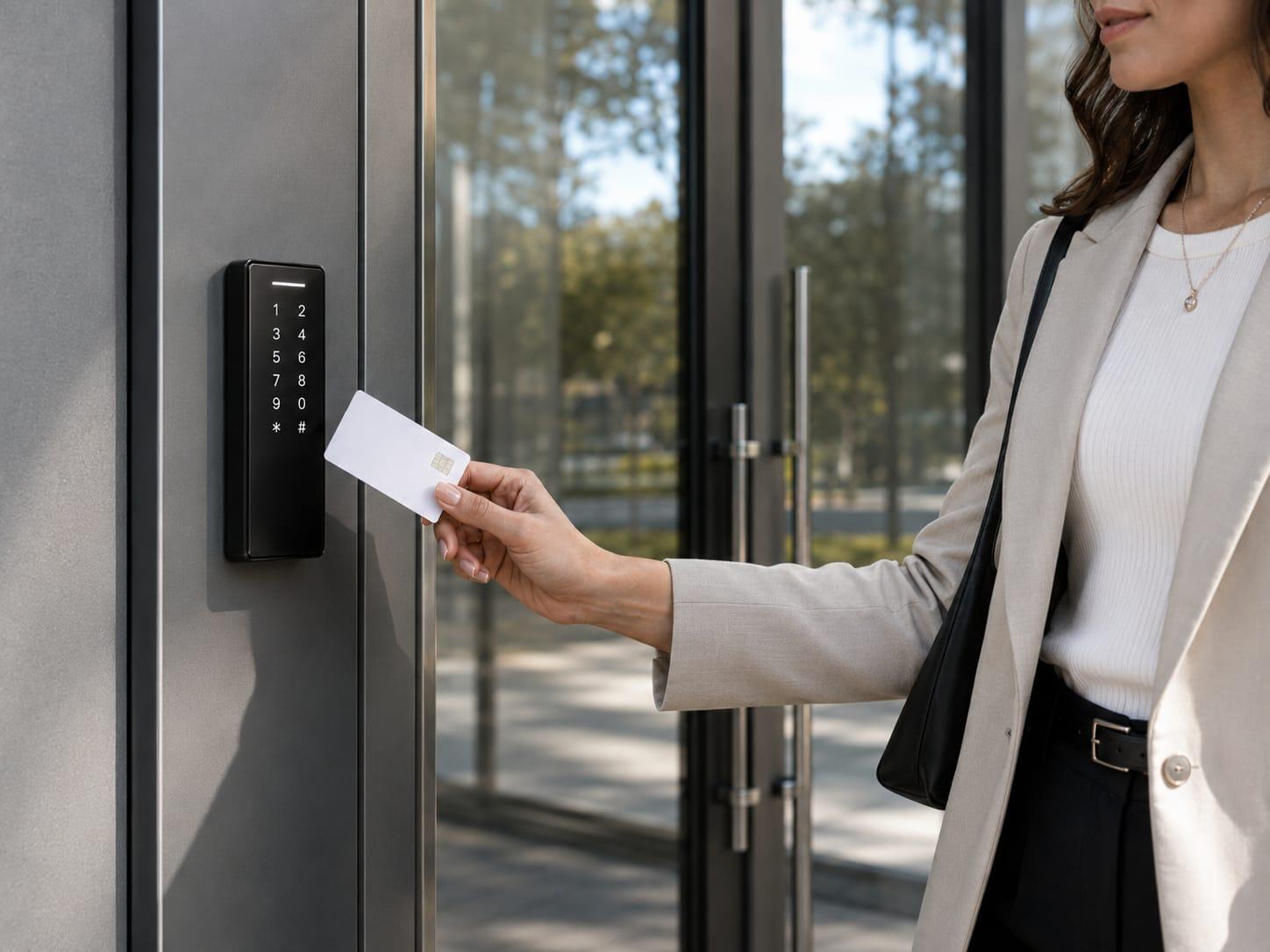
Smart Access Control – How Does It Improve Business Security?

Business security is about more than locking doors. Employees, suppliers, contractors, and visitors enter and leave every day, so it is important to know not only who may enter, but also when, which areas they may access, and under what conditions.
A smart access control system gives a business complete control over its entry points, enables a rapid response to unusual events, and helps manage permissions simply and efficiently. Beyond improving security, it saves time, reduces errors, and allows the business to grow without replacing the system whenever its needs change.
Complete control over access permissions
One of the main advantages of a smart access control system is the ability to define precise permissions for every user.
You can determine who may enter, which doors they may use, at what times, and on which days. When an employee joins the company, changes roles, or leaves, their permissions can be updated or revoked immediately.
This approach reduces the risk of unauthorized entry, eliminates the need to replace locks or collect keys, and lets the business manage permissions in an orderly, controlled way.
A complete record of every event
A smart access control system records every entry attempt, whether it is approved or denied.
The event history shows who entered, at what time, through which door, and the result of the entry attempt.
This information helps investigate unusual events, review complaints, and produce reports. Instead of relying on memory or employee accounts, all data is stored in the system and can be retrieved at any time.
Advanced systems that integrate artificial intelligence (AI) can also analyze event history, identify unusual patterns, highlight events that require attention, and accelerate search and investigation. This allows system administrators to find relevant information quickly and gain a clearer picture of what is happening in the business.
A rapid response to unusual events
A smart system can identify events in real time, such as:
- A door that remains open longer than the defined limit.
- An unauthorized entry attempt.
- Loss of communication with a controller.
- A door opening that does not comply with business policy.
For example, if the door to a storeroom or server room remains open for an unusual length of time, the system administrator can receive an immediate alert and address the issue before it creates a security risk.
Responding quickly to events helps minimize disruptions and maintain business continuity.
Information-driven management
A smart access control system does more than open doors. It also provides information that supports better decisions.
Reports and event history can reveal usage patterns, show which hours are busiest, identify unusual entry attempts, and help determine whether the current permission policy fits the business’s needs.
Advanced systems can also monitor the controllers themselves, including availability, controller software version, operating voltage, communication status, and controller temperature. This information helps identify problems early and perform preventive maintenance before they affect business operations.
Saving time and managing more efficiently
Access control management is part of the daily routine for many businesses. New employees join, visitors arrive, suppliers need temporary permissions, and changes sometimes need to be made quickly.
A smart system centralizes all these actions in one place and lets administrators complete them within minutes, without physically visiting every door or controller.
This reduces manual work, shortens response times, and allows system administrators to focus on more important tasks.
A system that grows with the business
Businesses change over time. New employees join, additional branches open, and the number of doors increases.
A smart access control system should make it possible to add new doors, controllers, and sites without replacing the existing infrastructure.
Choosing a flexible system from the start allows the business to keep developing while maintaining a consistent management environment and a uniform permission policy across every site.
How does EntryBit help businesses?
The EntryBit platform was developed to let businesses manage their entire access control operation from one system.
It enables real-time management of employees, permissions, doors, and visitors; remote door opening; reporting; alerts; and centralized management of multiple sites.
The system also includes:
- Employee and permission-group management.
- Visitor management.
- Remote door opening.
- Reports and event history.
- Real-time alerts.
- An API for integrations.
- Remote software updates (OTA).
- Monitoring of controller status, operating voltage, controller temperature, communication status, and controller software version.
The combination of advanced hardware and a modern management platform allows businesses to manage access simply, efficiently, and securely.
Summary
A smart access control system is much more than a way to open doors. It enables precise permission management, records every event, supports a rapid response to unusual situations, and helps decision-makers act on reliable information.
When choosing an access control system, it is worth considering not only the hardware capabilities but also the management software, expansion options, and tools the system provides for day-to-day operations. A well-designed system can serve a business for years, improve security, and make access management simpler, more efficient, and more dependable.