Door Access Control – A Smart Way to Manage Entry

Door access control lets a business precisely manage entry to the office, the storeroom, sensitive rooms, or any other area where controlled access is required.
Instead of relying on physical keys, every employee, supplier, or visitor can be given a personal permission that defines which doors they may enter and on which days and hours.
An advanced system can also record entry events, change or revoke permissions quickly, and manage multiple doors from one place.
In this article we explain how door access control works, what options it offers, and how it can help manage entry to your business.
What does it take to control a door?
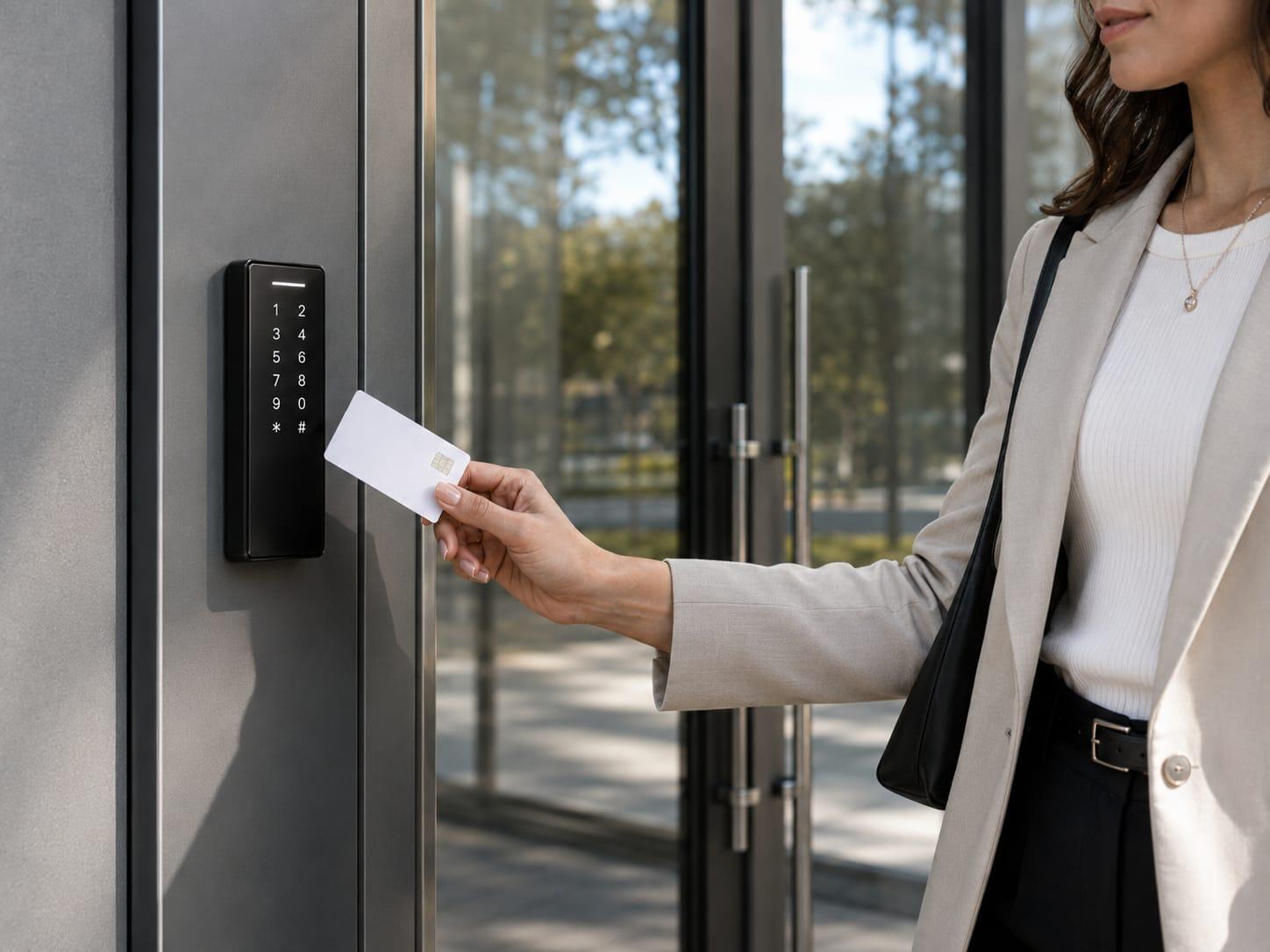
A door access control system is usually built from several components working together: a reader that identifies the user, a controller that checks the permission, and an electric or electromagnetic lock that releases the door.
When an employee presents a card, a mobile phone, or another means of identification, the controller checks whether a matching permission exists. If the user is authorized, the door opens and the event is recorded in the system.
Not every door needs the same permission
One of the important advantages of access control is the ability to create different access levels within the same building.
An employee can be authorized to enter the main door and their own office, while access to the storeroom, the server room, or a sensitive area remains limited to specific employees only.
Permissions can also be set to be active only on certain days and at certain hours, according to each role and the business’s operating hours.
What happens when an employee leaves?
This is where the difference between a regular key and an access control system is easiest to see.
When an employee leaves the company, their entry permission can be revoked immediately, with no need to replace a lock or to collect and reissue keys from other employees.
In the same way, a supplier, contractor, or visitor can be given a temporary permission that is valid only for the period in which they need to enter.
Knowing what happens at the door
Access control makes it possible not only to decide who may enter, but also to keep a record of the activity.
You can view entry events, see which permission was used to open the door, and check entry attempts that were denied.
When several doors or sites are managed, this information provides a clearer picture and makes managing entry easier.
From one door to an entire business
A business can start with access control for a single door or a small number of doors, and later add more employees, controllers, doors, and sites.
When the system is managed in the cloud, all sites can be managed from one place, without a separate system in every branch.
Door access control with EntryBit
The EntryBit system lets you manage doors, employees, visitors, and permissions through a central cloud-based access control platform.
You can define permissions by days and hours, open doors remotely, view event history, and manage multiple doors, controllers, and sites from a single system.
This makes it possible to start with a small number of doors and expand the system as the business grows and its needs change.
Summary
Door access control gives a business better control over who enters the building and the different areas inside it. It allows permissions to be managed flexibly, events to be recorded, and access to be tailored to every employee, supplier, or visitor.
At EntryBit, we would be happy to help tailor an access control solution to the needs of your business.